Make Love Not War
As an embroidery designer and product reviewer, I often find myself evaluating designs not just for their aesthetic appeal but for how they translate into real-world projects. Make Love Not War is a design that immediately speaks to the anti-war sentiment and retro typography style. It’s bold, memorable, and has a strong visual identity that can work well in various embroidery applications.
The First Impression
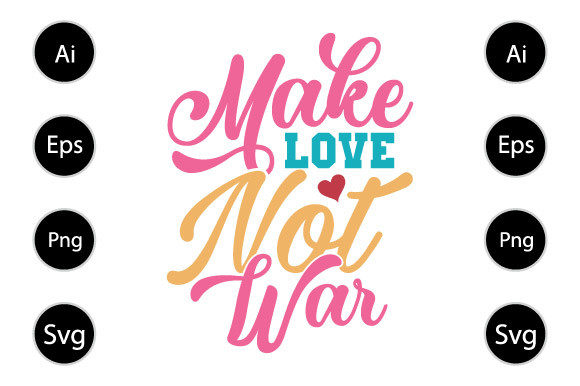
Make Love Not War carries a vintage vibe that feels nostalgic yet modern. The typography is clean, with a slightly hand-drawn feel that adds character without being too chaotic. The layout is balanced, making it suitable for a wide range of products. Its retro aesthetic suggests it would pair well with classic apparel like t-shirts, sweatshirts, or even tote bags. The design doesn’t scream for attention but commands it through its simplicity and message.
The level of detail is moderate, which means it’s not overly complex for machine embroidery. However, it does have enough definition to stand out on fabric. The spacing between letters is generous, which is great for readability and avoids issues with overlapping stitches.
Real-Life Embroidery Scenarios
Imagine you're preparing a custom embroidered tote bag for a client who wants something meaningful and stylish. Make Love Not War could be the perfect fit. The design would look good on a cotton tote, especially if the client prefers a minimalist approach. It also works well as a sweatshirt embroidery, adding a statement piece to casual wear.
For baby items, such as onesies or burp cloths, the design might be a bit too bold. However, if the parent is looking for something that makes a statement, it could still work. Just be mindful of the size and placement to ensure it doesn’t overwhelm the garment.
In terms of patches, Make Love Not War could be a standout piece. The clean lines make it ideal for applique or satin stitch. It would hold up well on denim or canvas, making it a solid choice for jackets or backpacks.
Where to Use With Caution
While Make Love Not War is versatile, there are situations where it might not perform as well. For instance, on small hoop sizes, the design could be challenging due to its dimensions. If you’re working on a cap or a hat, the curved surface might distort the design unless properly adjusted.
On textured fabrics, such as knits or thick weaves, the design may not sit as smoothly. Thin or stretchy fabrics could cause the stitches to pucker or pull. Dark fabrics might require a different thread color to ensure visibility, and dense stitch areas could lead to stiffness in the fabric.
For products that need frequent washing, such as tea towels or pillow covers, it’s important to test the design for durability. Make sure the stabilizer is appropriate and the stitch density isn’t too high, which could cause the fabric to wear out faster.
Impact on Visual Appeal and Customer Trust
Make Love Not War has the potential to elevate the visual appeal of any product it’s used on. Its retro style gives it a timeless quality that can resonate with a broad audience. When used on handmade products, it adds a layer of personality and intentionality that customers appreciate.
Stitching clarity is key when using this design. If the file is well-structured, the final result should be sharp and professional. This helps build customer trust, especially for small business owners and Etsy sellers who rely on quality and consistency.
As a personalized gift, Make Love Not War offers a meaningful touch. It can be used for wedding gifts, holiday presents, or even as a statement piece for a boutique brand. Its recognition factor is high, making it easy for customers to remember and connect with.
Practical Designer Notes
Before using Make Love Not War in your embroidery project, always test it on scrap fabric. This will help you see how the design looks in real life and identify any potential issues with stitch density or thread color contrast.
Check the file formats provided. If you’re using an AI Illustrator file or an SVG, make sure it’s compatible with your embroidery software. Review the hoop size requirements to avoid any resizing complications.
Inspect small details, especially if the design includes intricate elements or tiny lettering. Test it in black and white mockups to see how it translates on different fabric backgrounds. Ensure that the design works for both personal and commercial use, and confirm the licensing terms before selling finished items or digital products.
Use the right stabilizer for the fabric type. For example, a tear-away stabilizer works well on cotton, while a cut-away is better for stretchy materials. Proper stabilization ensures the design stays in place and maintains its shape after stitching.
Conclusion
Make Love Not War is a design that holds promise for a variety of embroidery projects. Its retro typography and clear layout make it adaptable for different applications. Whether you're creating custom apparel, personalized gifts, or small shop merchandise, it has the potential to add value and meaning to your work.
With careful consideration of fabric type, hoop size, and stitch density, Make Love Not War can become a staple in your design library. As a designer, I recommend treating it as a versatile asset that can enhance your creative output and meet the needs of your clients and customers alike.